
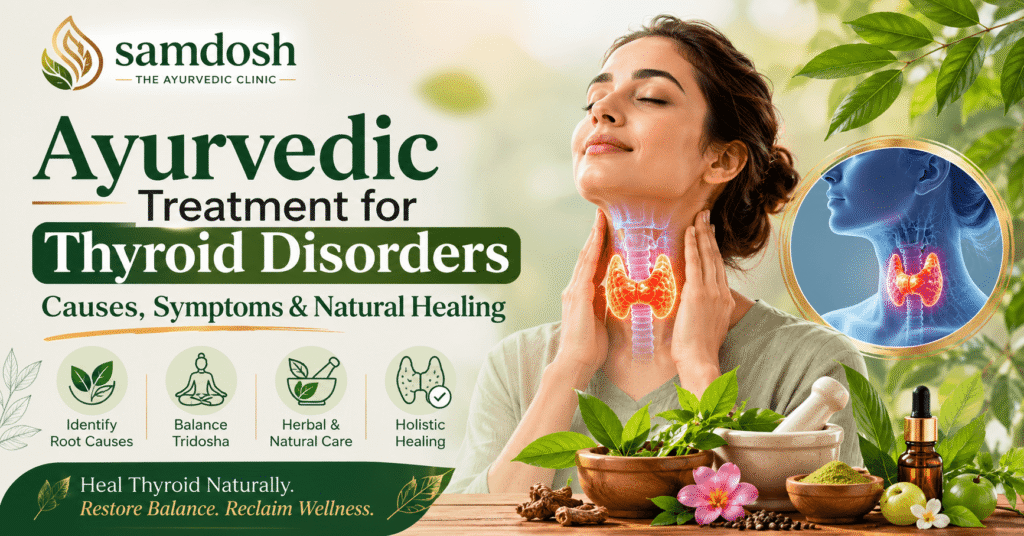
ayurvedic treatment for thyroid

Ayurvedic Treatment for Thyroid Disorders – Causes, Symptoms & Natural Healing

Natural | Root Cause | Personalized Treatment

In the modern era, the lifestyle, stress, poor nutrition, hormones imbalances, and environment have led to the increasing prevalence of thyroid disorders in both men and women. Although the thyroid gland is a small organ, it is very important, and influences metabolism, energy production, body temperature, digestion, reproductive health and emotional balance.

If the thyroid gland doesn’t work well, it can impact nearly all systems in the body. Weight gain, tiredness, hair loss, irregular periods, anxiety, trouble focusing or a poor metabolism are all common complaints that many people make without knowing that these issues can be caused by thyroid problems.

We believe in treating the cause and not the symptoms at Samdosh Ayurveda, one of the frontrunner Ayurvedic Clinic in Noida. The aim of the Ayurvedic Treatment for Thyroid Disorders is to balance the doshas, boost metabolism, detoxify, promote hormonal balance and restore natural wellness.

What Is the Thyroid Gland?

The thyroid gland is located in the front of the neck in the shape of a butterfly. It secretes hormones that control many bodily functions such as:

  • Metabolism
  • Heart rate
  • Body temperature
  • Digestion
  • Menstrual cycle
  • Energy production
  • Growth and development

Thyroid disorders start to occur when the production of thyroid hormone is either too high or too low.

Types of Thyroid Disorders

A common query is, “Kitne types ke thyroid hote hai?” (Types of Thyroids). It is important to recognize the different varieties in order to determine the treatment strategy.

Hypothyroidism

Hypothyroidism is a condition in which the thyroid makes less than normal amount of hormones. This is the most frequent thyroid problem, especially in women.

Hyperthyroidism

Hyperthyroidism occurs when the thyroid gland makes too much hormone, which increases the body’s metabolic rate.

Goiter

Goiter is an enlargement of the thyroid gland that can happen with a normal, low or high level of thyroid hormone.

Thyroid Nodules

They are abnormal tissues or masses that develop in the thyroid gland.

Autoimmune Thyroid Disorders

Several diseases are associated with a faulty immune response that attacks thyroid tissue – namely Hashimoto’s Thyroiditis and Graves’ Disease.

Knowing the treatment of thyroid disorder Ayurveda is essential to understand the particular thyroid disorder in a person.

Common Symptoms of Thyroid Disorders

Symptoms depend on whether the thyroid activity is low or high.

Symptoms of Hypothyroidism

Hypothyroidism symptoms may take time to develop.

Common symptoms include:

  • Persistent fatigue
  • Weight gain
  • Hair thinning
  • Dry skin
  • Constipation
  • Depression
  • Slow metabolism
  • Cold intolerance
  • Brain fog
  • Menstrual irregularities

These symptoms are highly affecting the day-to-day life of a woman, and a lot of women seek treatment for thyroid in female Ayurvedic medicine.

Symptoms of Hyperthyroidism

Hyperthyroidism can cause symptoms including:

  • Unexplained weight loss
  • Rapid heartbeat
  • Anxiety
  • Excessive sweating
  • Tremors
  • Irritability
  • Difficulty sleeping
  • Increased appetite

Early diagnosis can prevent chronic complications.

Causes of Thyroid Disorders

There are a number of factors that lead to thyroid dysfunction.

Autoimmune Conditions

Some of the most common causes of thyroid disorders include Hashimoto’s Thyroiditis and Graves’ Disease.

Chronic Stress

Chronic stress impacts the functioning of the endocrine system and can be a factor in hormone imbalance.

Nutritional Deficiencies

The thyroid needs iodine, selenium, zinc, and iron.Thyroid may be affected by iodine, selenium, zinc and vitamin D deficiencies.

Hormonal Imbalances

Thyroid dysfunction is seen often in women during puberty, pregnancy and menopause.

Poor Lifestyle Habits

Disrupted sleeping patterns, processed food, sedentary lifestyle, and spending too much time on screens can have a detrimental impact on metabolism.

Genetic Factors

Thyroid disorders are more likely to run in the family.

Which Dosha Causes Hypothyroidism?

One of the most common Ayurvedic questions is: Which dosha causes hypothyroidism?

In Ayurveda, hypothyroidism is mostly correlated with a dysfunction of:

Kapha Dosha

When there is an excess of Kapha, metabolism can slow down, weight gain can increase, lethargy can increase and digestion fire can diminish.

Vata Dosha

If Vata is disturbed in conjunction with Kapha, then hormonal communication and nourishment of the tissues can become upset.

Weak Agni (Digestive Fire)

Ama is the result of poor digestion that can prevent normal metabolism.

Hence, Thyroid Disorders Treatment Ayurveda is aimed at balancing Kapha and Vata and toning the digestion.

What Our Patients Are Saying

Nitin Bhattrai
★★★★★
Best Ayurveda Clinic, very polite and friendly staff and doctors.

Sarita Yadav
★★★★★
After treatment for PCOD and fatty liver, I got excellent results.

Ajay Raj
★★★★★
Best place for fatty liver and digestion treatment.

Neha Yadav
★★★★★
Amazing treatment experience. Highly recommended Ayurveda therapies.

Nitin Bhattrai
★★★★★
Best Ayurveda Clinic, very polite and friendly staff and doctors.
Sarita Yadav
★★★★★
After treatment for PCOD and fatty liver, I got excellent results.
Ajay Raj
★★★★★
Best place for fatty liver and digestion treatment.
Neha Yadav
★★★★★
Amazing treatment experience. Highly recommended Ayurveda therapies.

Ayurvedic Understanding of Thyroid Disorders

Thyroid disease is not a single disease according to Ayurveda. Rather, it sees thyroid dysfunction as being caused by:

  • Dosha imbalance
  • Weak digestion
  • Accumulation of toxins
  • Impaired metabolism
  • Hormonal disruption

Once the metabolic flame is extinguished or weak, toxins build up, disrupt the body’s normal endocrine processes.

The main goals of the treatment of thyroid disorders Ayurveda are:

  • Improving metabolism
  • Enhancing digestion
  • Balancing hormones
  • Removing toxins
  • Ensuring a healthy thyroid function naturally

Which Treatment Is Best for Thyroid – Allopathy or Ayurvedic?

Many people ask “Which treatment is best for your thyroid – allopathy or ayurvedic?”.

There are differences between both systems.

Allopathic Approach

The main aim of modern medicine is to replace the thyroid hormones or regulate overproduction of the hormones.

This can be a useful method of regulating hormones and is required in many situations.

Ayurvedic Approach

The approach of Ayurvedic Treatment for Thyroid Disorders is to pinpoint the imbalance and eliminate it from the body.

Ayurveda aims to:

  • Improve metabolism
  • Balance doshas
  • Strengthen digestion
  • Support endocrine health
  • Promote long-term wellness

Some people choose to receive medical supervision along with Ayurvedic lifestyle support for full thyroid control.

Thyroid Treatment in Female Ayurvedic Medicine

Thyroid disorders are more common in women than in men.

Hormonal changes during:

  • Puberty
  • Pregnancy
  • Postpartum period
  • Perimenopause
  • Menopause

can affect thyroid activity.

Female-Focused Ayurvedic Care

In the Ayurvedic system of medicine, treatment of the thyroid is done using the following ingredients:

  • Hormonal balancing herbs
  • Digestive support
  • Stress management
  • Menstrual health correction
  • Panchakarma therapies

This holistic approach supports both thyroid health and reproductive wellness.

Doctor For Thyroid Disorders

At our clinic in Noida, our Ayurvedic doctor focuses on understanding the root cause of your thyroid concerns rather than simply managing symptoms. During your consultation, they assess your lifestyle, dietary habits, stress levels, sleep patterns, digestion, hormonal balance, and dosha imbalances to create a personalized treatment plan tailored to your unique needs.

Whether you are dealing with hypothyroidism, hyperthyroidism, weight fluctuations, fatigue, hair fall, or other thyroid-related concerns, our approach aims to support overall well-being and restore balance naturally. The treatment plan may include carefully selected Ayurvedic herbs, Panchakarma therapies, dietary recommendations, and lifestyle guidance designed to support healthy thyroid function.

Our goal is not only to help manage thyroid-related symptoms but also to promote long-term health, improved energy levels, better metabolism, and overall wellness through a holistic Ayurvedic approach.

Ayurvedic Medicines Commonly Used for Thyroid Support

Some herbs have been traditionally used to promote metabolic and endocrine health.

Kanchanar Guggulu

One of the most popular Ayurvedic formulas for thyroid support.

Ashwagandha

Promotes stress relief and hormone balance.

Guduchi

Promotes immunity and metabolic health.

Punarnava

Assists in the elimination of fluid in the body and helps to eliminate toxins.

Triphala

Helps to break down food and flush out waste.

Guggulu

Helps improve metabolism and tissue health.

These herbs should only be taken under professional supervision.

Panchakarma Therapy for Thyroid Disorders

Panchakarma is an important component of Ayurvedic Treatment for Thyroid Disorders.

Doctors make a thorough examination of patient’s constitution and dosha imbalance prior to starting Panchakarma.

The following are common Panchakarma procedures:

Virechana

Helps with detoxification and metabolism.

Basti

Helps balance Vata Dosha.

Abhyanga

Improves circulation and relaxation.

Shirodhara

Relieves stress and promotes emotional balance.

These treatments help to improve the effectiveness of thyroid treatment in Noida and their programs.

How to Detox Your Thyroid Naturally

A frequently searched question is: How to detox your thyroid naturally?

There is no quick thyroid detox, but Ayurveda recommends natural detox by maintaining healthy lifestyle.

Natural Ways to Support Thyroid Detoxification

Proper digestion is directly linked to thyroid health and one of the best ways to ensure it. Proper diet, hydration, exercise, proper rest and stress management play a big role in regulating hormones.

In Ayurveda, the elimination of processed foods, excess sugar and bad fats, combined with proper food habits and herbal recommendations, and are also promoted in order to enhance digestive fire.

This is one of the fundamental principles of the Ayurvedic treatment of thyroid disorders.

Diet Recommendations for Thyroid Health

Food directly affects the metabolism and hormonal function.

Foods That Support Thyroid Health

Healthy metabolism relies on fresh vegetables, seasonal fruits, nuts and seeds, whole grains and good quality protein sources.

Intake of selenium, zinc and iodine are also important.

Foods to Limit

Too much of processed foods, sugary foods, fried foods and too much junk food can have a negative impact on metabolism and hormonal balance.

In Ayurvedic Treatment for Thyroid Disorders, a customized diet plan is typically part of the treatment.

Yoga and Lifestyle Support for Thyroid Disorders

Long term management of thyroid includes lifestyle correction.

Helpful Practices

Yoga postures such as:

  • Sarvangasana
  • Matsyasana
  • Bhujangasana
  • Ustrasana

May assist circulation and general well-being.

Stress can sometimes be related to thyroid dysfunction and regular meditation and breathing exercises help alleviate stress.

Expert Ayurvedic Doctors at Samdosh Ayurveda

Samdosh Ayurveda uses the skill and knowledge of the Ayurvedic doctors to give an individualised treatment plan for each patient based on his symptoms, lifestyle, digestion, hormonal profile, emotional health and body constitution.

Our treatment at Ayurvedic Clinic in Noida is a blend of ancient Ayurvedic principles and contemporary knowledge of the endocrine system. By using herbal medicines, Panchakarma treatments, diet, stress management and lifestyle correction, we naturally improve thyroid health in patients and help them to attain sustainable results.

Conclusion:

Thyroid problems may impact upon the metabolism, energy, weight, digestive system, reproductive system, and emotional system. Avoiding treatment can result in the condition worsening, and impacting quality of life.

The Ayurvedic approach to Thyroid Disorders emphasizes the importance of balancing the underlying disharmony by using individualised treatment, herbal remedies, Panchakarma treatments, diet modifications and lifestyle changes. Rather than only managing symptoms, Ayurveda is designed to treat the underlying cause to promote thyroid health and a healthy lifestyle naturally.

Frequently Asked Questions

1. Does Ayurveda have a solution for thyroid problems?

The Ayurveda is all about natural metabolism improvement, balancing doshas and hormonal health.

The most common association with Kapha Dosha is hypothyroidism and frequently there is a Vata imbalance.

Many women take Ayurvedic support to get the balance of their hormones even, their metabolism right and to bring overall wellness.

A healthy diet and digestion, Panchakarma therapies, stress management and lifestyle correction support the health of the thyroid gland naturally.

There are differences in the strengths of both approaches. Treatment should be considered in conjunction with competent medical advice.

Our Lates Blogs:

Struggling With IBS? Discover Natural Ayurvedic Relief For IBS

Struggling With IBS? Discover Natural Ayurvedic Relief For IBS Living with Irritable Bowel Syndrome (IBS) can feel exhausting. Frequent stomach...

What Ayurveda Says About Erectile Dysfunction – Foods & Lifestyle That Truly Help!

What Ayurveda Says About Erectile Dysfunction – Foods & Lifestyle That Truly Help! A SILENT STRUGGLE MEN ARE AFRAID TO...
PCOD vs PCOS: What’s the Difference & How to Treat It Naturally

PCOD vs PCOS: What’s the Difference & How to Treat It Naturally Why PCOD & PCOS Are Rising Rapidly PCOD...

Scroll to Top