
How to Control Masturbation Habit Naturally: An Ayurvedic and Holistic Guide to Self-Control, Mental Clarity, and Healthy Living
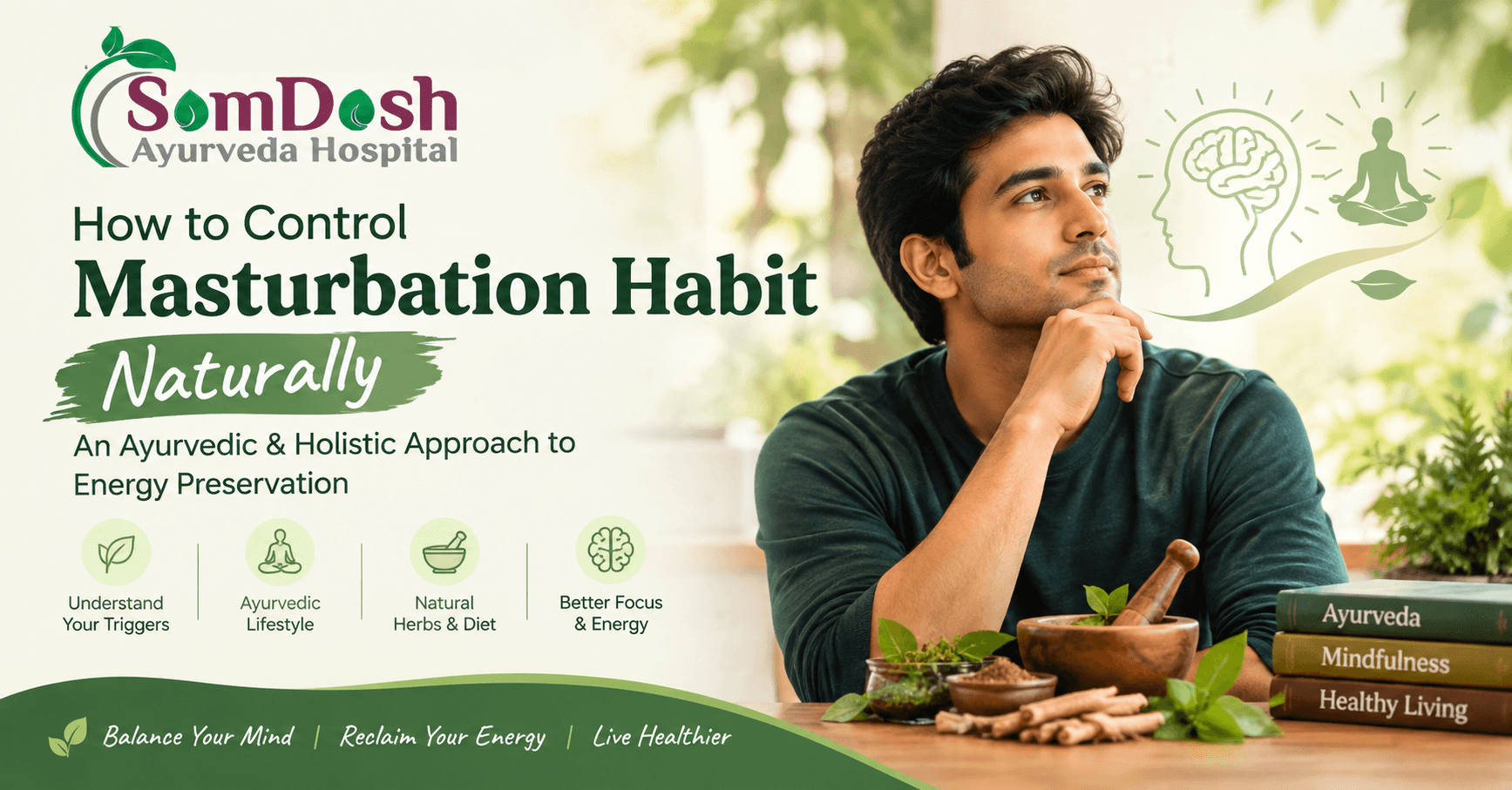
In today’s fast-moving digital world, maintaining control over our attention, emotions, and daily habits has become increasingly difficult. Smartphones, social media, explicit online content, irregular sleep schedules, work-related stress, and loneliness can influence how we respond to our thoughts and impulses. For some people, masturbation becomes one of the easiest ways to seek temporary relaxation, comfort, or an escape from everyday pressure.
Masturbation is a common and generally normal part of human sexuality. It is not, by itself, a disease or a sign of physical weakness. However, when the behaviour starts feeling difficult to control, takes up excessive time, interferes with sleep or work, or becomes the primary way of coping with stress, it may be worth taking a closer look at the underlying pattern.
Many people who search for ways to control masturbation are not necessarily trying to eliminate their sexual desires altogether. They may simply want to regain control over their time, improve concentration, reduce dependence on pornography, build healthier routines, or feel more confident about their choices.
This is where a balanced approach becomes important.
Ayurveda offers a traditional framework for understanding self-discipline, daily routine, mental balance, and the responsible management of sexual activity. When combined with modern behavioural strategies, adequate sleep, physical activity, and emotional awareness, these principles can support a healthier relationship with one’s impulses.
At SamDosh Ayurveda, the goal should not be to create fear or shame around natural sexual feelings. Instead, the emphasis is on understanding individual needs, building sustainable habits, and seeking appropriate guidance when a behaviour begins to affect quality of life.
This comprehensive guide explains how to manage masturbation urges naturally, understand the Ayurvedic concept of Brahmacharya, identify personal triggers, and develop practical strategies for better self-control.
1. Understanding Masturbation: When Does a Habit Become a Problem?
Before trying to control any habit, it is important to understand what you are actually trying to change.
Masturbation is a natural sexual behaviour. There is no single frequency that is considered normal for everyone. Some people masturbate occasionally, others more frequently, and some do not masturbate at all. Frequency alone does not determine whether a person has a problem.
The more important question is: Are you in control of the behaviour, or is the behaviour beginning to control your life?
For example, imagine someone who masturbates occasionally, feels comfortable with their choices, and continues to meet their personal and professional responsibilities. There may be no reason for that person to change their behaviour.
Now consider someone who repeatedly stays awake until 2 AM watching explicit content, misses work deadlines, struggles to concentrate during the day, and promises themselves every morning that they will stop but finds themselves repeating the same pattern at night.
The second situation deserves attention, not because masturbation is inherently harmful, but because the repeated behaviour is interfering with everyday life.
Common signs that you may need better habit management
You repeatedly engage in the behaviour even when you have decided not to.
You spend more time watching pornography or seeking sexual stimulation than you intended.
You use masturbation as your main response to stress, boredom, loneliness, frustration, or sadness.
You lose sleep because of late-night browsing or sexual activity.
You find it difficult to focus on work, studies, relationships, or personal goals.
You experience persistent distress or feel that the behaviour conflicts with your personal values.
You repeatedly make unrealistic promises to yourself and then experience guilt when you do not follow them.
Having one or two of these experiences does not automatically mean you have an addiction. What matters is the overall pattern, the degree of control you feel you have, and whether the behaviour causes meaningful distress or disruption.
If the pattern continues despite repeated attempts to manage it, speaking with a qualified mental health professional can be helpful.
2. Why Do Masturbation Urges Occur So Frequently for Some People?
An urge rarely appears in isolation. It is often connected to a combination of physical sensations, emotions, environmental cues, habits, and learned responses.
Understanding these connections can help you develop a more effective plan than simply telling yourself to stop.
A. Stress and emotional pressure
After a demanding day, the mind naturally looks for ways to relax. Some people watch videos, others eat comfort food, and some turn to masturbation because it offers temporary pleasure or relief.
The difficulty arises when this becomes the only coping mechanism.
If every stressful moment leads to the same behaviour, the brain can gradually learn to associate stress with sexual stimulation. Over time, the urge may appear automatically whenever a similar emotional situation occurs.
What can help: Develop alternative ways to manage stress, such as walking, talking to a trusted person, journaling, listening to music, or practising slow breathing.
B. Boredom and unstructured time
Notice when urges usually occur. Is it during long periods alone? After completing work? While lying in bed with your phone? Or when you have nothing planned for the evening?
Boredom can make familiar, immediately rewarding activities particularly appealing.
A person who spends several hours scrolling without a clear purpose may encounter repeated triggers and eventually fall into a familiar routine.
What can help: Give unstructured periods a simple purpose. Plan a walk, prepare tomorrow’s schedule, learn a skill, or spend time on a meaningful activity.
You do not need to remain busy every minute. The goal is to avoid relying on one repetitive behaviour whenever you feel bored or restless.
C. Pornography and digital stimulation
Digital platforms make stimulating content easy to access, often without any planning. Recommendations, short videos, explicit images, and late-night browsing can expose people to triggers repeatedly.
For some individuals, pornography becomes more disruptive than masturbation itself because it encourages prolonged browsing, interferes with sleep, or creates a cycle of searching for increasingly stimulating content.
Not everyone who watches pornography develops compulsive behaviour. However, if you notice that certain apps or websites consistently lead to unwanted behaviour, changing your digital environment may be useful.
What can help:
Unfollow accounts that repeatedly trigger unwanted urges.
Use website blockers or content filters if they help you maintain your goals.
Keep your phone away from your bed.
Avoid aimless scrolling when you are tired or emotionally distressed.
Set a clear stopping time for screens at night.
The objective is not to fear technology. It is to use it intentionally rather than allowing it to dictate your routine.
D. Loneliness and emotional discomfort
Sometimes a sexual urge is partly a response to an emotional need. A person may be seeking comfort, reassurance, connection, or a temporary escape from uncomfortable feelings.
This does not mean every urge has an emotional cause. Sexual desire is also a normal biological experience.
However, if you repeatedly notice the urge appearing when you feel lonely or discouraged, addressing those feelings directly may make habit management easier.
Building meaningful relationships, spending time outdoors, engaging in hobbies, and discussing emotional difficulties with someone trustworthy can all contribute to a more balanced lifestyle.
E. Sleep deprivation and irregular routines
Late-night screen use, insufficient sleep, and inconsistent daily schedules can make it harder to regulate attention and impulses.
When you are tired, it may be more difficult to pause, consider consequences, and follow the intentions you set earlier in the day.
A consistent sleep routine will not eliminate sexual desire, but it can support better decision-making and emotional regulation.
3. The Ayurvedic Perspective: Brahmacharya, Mindfulness, and Balanced Living
Ayurveda views health as more than the absence of physical illness. Its traditional framework considers the relationship between the body, mind, senses, diet, sleep, and daily conduct.
Within this framework, Brahmacharya is an important concept associated with moderation, self-discipline, and the thoughtful use of one’s physical and mental resources.
It is often interpreted narrowly as complete celibacy. However, in broader traditional discussions, its practical application can also involve regulating sensory stimulation, avoiding excess, and living according to one’s responsibilities and stage of life.
For someone trying to manage a compulsive habit, this perspective can offer a useful starting point.
What does Brahmacharya mean in everyday life?
Brahmacharya does not need to be approached as a constant battle against sexual thoughts. A more sustainable interpretation is to learn how to respond to those thoughts without automatically acting on them.
Consider the following example.
A person is working on an important project when an urge appears. They feel restless and reach for their phone. Within minutes, they are browsing unrelated content and eventually abandon their work.
Practising self-discipline in this situation could mean noticing the urge, putting the phone aside, taking a short walk, and returning to the task.
The desire may still be present, but the person has created a pause between the impulse and the response.
That pause is an important practical skill.
Indriya Nigraha: Becoming conscious of sensory inputs
Indriya Nigraha is a traditional concept associated with the regulation of the senses. In modern daily life, this idea can be applied to how we manage digital content, entertainment, distractions, and environmental triggers.
You cannot always control which thoughts enter your mind, but you can often influence what you repeatedly expose yourself to and how you respond.
Practical applications include:
Reducing unnecessary exposure to triggering content.
Setting boundaries around social media.
Creating a peaceful bedtime routine.
Avoiding habitual phone use during work or study.
Spending time in environments that support concentration.
The purpose is not to suppress every thought. It is to make more conscious choices about your attention and actions.
Shukra Dhatu and Ojas: Understanding traditional Ayurvedic terminology
In Ayurvedic physiology, Shukra Dhatu is described as one of the seven Dhatus, or fundamental bodily tissues. Ojas is traditionally understood as an important essence associated with vitality and resilience.
These concepts have a specific place within Ayurvedic theory and should be understood within that traditional context.
They are not direct equivalents of modern scientific measurements of reproductive health, immunity, hormones, or physical energy. Modern medicine does not establish that ordinary ejaculation rapidly depletes essential bodily tissues or prevents the body from producing Ojas.
Similarly, masturbation does not inherently cause chronic weakness, poor memory, reduced intelligence, or infertility.
If someone experiences persistent fatigue, concentration problems, low mood, or sexual difficulties, it is important to consider other possible explanations, including insufficient sleep, stress, nutritional deficiencies, medication effects, or underlying medical conditions.
Ayurvedic concepts can provide a cultural and philosophical framework for discussing balance and moderation, but they should not replace evidence-based assessment when symptoms are present.
4. How to Control Masturbation Urges: A Practical Step-by-Step Approach
The most useful habit-management plan is one you can realistically follow on ordinary days, including days when motivation is low.
You do not need to change your entire life overnight. Begin by identifying your pattern and making small, repeatable adjustments.
Step 1: Identify your personal triggers
For the next seven days, observe when unwanted urges tend to appear.
You can record three simple details:
Situation: Where were you, and what were you doing?
Emotion: Were you bored, stressed, lonely, tired, or relaxed?
Response: What did you do when the urge appeared?
For example:
Situation: Lying in bed at 11:30 PM.
Emotion: Bored and mentally restless.
Response: Opened social media, encountered triggering content, and continued browsing.
This record reveals a possible pattern: the combination of late-night phone use and boredom.
The solution may therefore begin with changing the bedtime routine, rather than trying to fight every urge through willpower alone.
Keep the record private and non-judgmental. It is a tool for understanding behaviour, not a list of personal failures.
Step 2: Practise the 10–15-minute pause
An urge can feel urgent, but you do not have to respond immediately.
When an unwanted urge appears, try the following:
Minute 1–2: Recognise it.
Tell yourself, “I am experiencing an urge. I do not have to make a decision immediately.”
Avoid labelling yourself as weak or undisciplined.
Minute 3–5: Change your surroundings.
Stand up, leave the bedroom, put your phone away, or move to a common area. Changing the environment can interrupt a familiar sequence of behaviour.
Minute 6–10: Redirect your attention.
Walk around, stretch, wash your face, tidy your desk, or complete a small practical task.
Choose an activity that is easy to begin, even when motivation is low.
Minute 11–15: Reassess the urge.
Notice whether the urge has changed. You may find that it has weakened, remained similar, or shifted into another feeling, such as boredom or anxiety.
If the urge is still present, you can repeat the process or choose another activity.
This technique is not a guaranteed way to eliminate sexual desire. Its purpose is to build the ability to pause and choose your response.
Step 3: Reduce pornography-related triggers where necessary
If pornography is a major part of the pattern you want to change, make your digital environment work in your favour.
Start with manageable steps:
Remove saved links or bookmarks that repeatedly lead to unwanted browsing.
Set screen-time limits for specific apps.
Consider a content blocker if you find it useful.
Avoid taking your phone into bed.
Charge your phone outside the bedroom when practical.
Use social media with a clear purpose rather than scrolling indefinitely.
Some people prefer to reduce pornography gradually, while others find a clear boundary more helpful. The right approach depends on your circumstances and goals.
Remember that masturbation and pornography use are not identical behaviours. You can work on reducing problematic pornography use without treating all sexual feelings as harmful.
Step 4: Build a daily exercise routine
Physical activity can support mood, sleep, stress management, and general health. It can also give structure to periods when you would otherwise spend time scrolling or dwelling on unwanted urges.
Choose an activity that suits your fitness level:
Brisk walking for 20–30 minutes.
Strength training with appropriate guidance.
Cycling, swimming, or playing a sport.
Gentle yoga or mobility exercises.
Short movement breaks during long periods of sitting.
Consistency is more important than intensity.
You do not need exhausting workouts or extreme exercise to develop self-control. Overtraining can contribute to fatigue and make a healthy routine harder to maintain.
Step 5: Use breathing and mindfulness practices
Slow breathing and mindfulness can help you notice thoughts and physical sensations without immediately reacting to them.
A simple practice is to sit comfortably, breathe gently through your nose, and observe each breath for three to five minutes.
When your attention wanders, bring it back to the breath without criticising yourself.
You can also practise mindful walking, in which you pay attention to your steps, surroundings, and breathing.
In an Ayurvedic lifestyle context, gentle practices such as Anulom Vilom may be incorporated if they are comfortable for you. Learn the technique properly and avoid forceful breathing or prolonged breath retention if you are inexperienced or have a relevant medical condition.
Kapalbhati and Bhastrika are more vigorous practices and are not necessary for controlling masturbation urges. If you wish to practise them, seek appropriate instruction and medical advice when relevant.
There is no reliable evidence that a particular breathing exercise physically redirects sexual energy upward along the spine. The practical benefit to focus on is developing calm attention and a more considered response to impulses.
Step 6: Create a healthier bedtime routine
For many people, the most difficult period is late at night, when responsibilities are finished and there are fewer distractions.
A consistent evening routine can reduce opportunities for automatic behaviour.
Try the following:
Finish demanding work at a reasonable time.
Avoid prolonged scrolling before bed.
Keep your phone away from your pillow.
Read, listen to relaxing audio, or prepare for the next day.
Maintain a consistent sleep and wake time.
Aim for approximately seven to nine hours of sleep if you are an adult.
Going to bed before 10:30 PM may suit some people, but there is no universal requirement to sleep at that exact time. Consistency and sufficient sleep are more important than following a rigid clock-based rule.
Also, masturbation itself does not necessarily cause wet dreams or make them harmful. Nocturnal emissions can occur naturally and do not require treatment simply because they happen.
Step 7: Replace the habit rather than relying on suppression
When you remove a familiar activity, you may be left with an empty space in your routine.
If that space remains unfilled, it is easy to return to the same behaviour.
Choose two or three alternatives that you genuinely enjoy:
Reading a book.
Learning a professional skill.
Working on a creative project.
Spending time with friends or family.
Practising a sport.
Gardening or walking outdoors.
Preparing a healthy meal.
Volunteering or contributing to a community activity.
The replacement should provide a meaningful use of your time, not simply serve as another task you force yourself to complete.
The goal is to develop a satisfying life in which one repetitive habit becomes less central.
Step 8: Respond constructively if you slip
One of the most damaging patterns is the cycle of strict promises, a lapse, guilt, and another strict promise.
For example, someone decides never to masturbate again. A few days later, they do it once and conclude that they have failed completely. They then feel discouraged and abandon their other healthy routines.
A more helpful response is to review what happened.
Ask yourself:
What was happening just before the behaviour?
Was I tired, anxious, lonely, or exposed to a trigger?
What could I change next time?
Did the behaviour actually interfere with my responsibilities, or am I judging myself harshly?
A lapse does not erase the progress you have made.
If your goal is to reduce compulsive behaviour, measure improvement by greater control, less disruption, and healthier coping—not solely by the number of days without masturbation.
5. Ayurvedic Herbs and Rasayana: What Should You Know?
Ayurveda traditionally uses herbs and Rasayana preparations within broader approaches to health, nourishment, and wellbeing. However, an herb that is traditionally described as rejuvenating is not automatically a proven treatment for compulsive masturbation or pornography use.
There is currently insufficient reliable clinical evidence to recommend a particular Ayurvedic herb as a specific cure for this behaviour.
The following herbs are often discussed in Ayurvedic wellness contexts, but their uses, safety, and suitability differ.
Ashwagandha
Ashwagandha is traditionally used in certain Ayurvedic preparations associated with stress management and general wellbeing. Some clinical research suggests potential benefits for stress or sleep in selected populations, but evidence varies by preparation and study quality.
It has not been established as a treatment for compulsive sexual behaviour.
Ashwagandha may cause adverse effects, interact with medications, and has been associated with rare cases of liver injury. It may not be suitable for people with certain thyroid, autoimmune, liver, or other health conditions.
Brahmi
Brahmi is a name commonly used for Bacopa monnieri in Ayurvedic practice. Some research has investigated its effects on aspects of cognitive performance, but results do not establish it as a treatment for sexual urges, addiction, or poor impulse control.
It may cause gastrointestinal side effects and can interact with medications.
Shankhpushpi
Shankhpushpi is traditionally used in formulations associated with mental wellbeing. Evidence for specific clinical benefits remains limited, and products sold under this name may contain different plant species or formulations.
Its suitability should be assessed individually.
Shatavari and Gokshura
Shatavari and Gokshura have traditional uses in different aspects of health, including reproductive and urinary wellness. However, claims that they directly control masturbation urges, prevent ejaculation-related weakness, or restore depleted sexual energy are not established by robust clinical evidence.
Their use should depend on an individual’s health needs, medications, and the quality of the preparation.
Important guidance before using Ayurvedic supplements
Before starting any herbal formulation:
Consult a qualified healthcare practitioner who knows your medical history.
Discuss existing medications and supplements.
Check the product’s ingredients, manufacturer, and quality assurance.
Avoid products making guaranteed claims about testosterone, sexual stamina, or addiction recovery.
Do not stop prescribed medication or delay appropriate care in favour of supplements.
For many people, improving sleep, reducing problematic digital stimulation, managing stress, and developing consistent routines are more practical starting points than purchasing supplements.
6. Dietary Habits for General Energy and Wellbeing
A balanced diet supports general physical and mental health. However, there is no convincing evidence that a particular food can reliably prevent masturbation urges or that ordinary ejaculation requires a special diet to replenish lost reproductive tissue.
Within Ayurvedic dietary traditions, fresh and balanced meals are often associated with a Sattvic approach to eating. This framework may encourage mindful eating, moderation, and a regular routine.
You can apply those principles without following unnecessary dietary restrictions.
Include a variety of nourishing foods
Depending on your individual needs, a balanced diet may include:
Seasonal fruits and vegetables.
Whole grains and other fibre-rich foods.
Pulses, beans, lentils, and other protein sources.
Nuts and seeds.
Milk, yoghurt, or suitable fortified alternatives.
Adequate water throughout the day.
These foods support general nutrition. They should not be viewed as a direct treatment for compulsive sexual behaviour.
Limit habits that interfere with sleep and self-control
Excessive caffeine, particularly later in the day, can affect sleep in sensitive individuals. Alcohol can also impair judgement and disrupt sleep.
If these substances contribute to your personal pattern, reducing them may help you maintain a more consistent routine.
There is no need to eliminate every spicy, salty, or culturally familiar food solely because you are trying to control masturbation.
Maintain regular meals
Skipping meals or following restrictive diets may leave you tired, hungry, or irritable.
Regular meals that meet your nutritional needs can support stable energy levels and make healthy routines easier to maintain.
If persistent weakness, dizziness, or fatigue is present, consider a medical assessment instead of assuming that masturbation is responsible.
7. The Role of Sleep, Stress, and Mental Health
Sexual behaviour does not occur separately from the rest of your life.
A person who is sleeping poorly, experiencing work pressure, feeling isolated, or dealing with anxiety may find it harder to follow personal boundaries.
For this reason, a holistic approach should consider mental and emotional wellbeing alongside physical habits.
Manage stress before it becomes overwhelming
Try building small stress-management activities into your day rather than waiting until you feel overwhelmed.
A five-minute break, a short walk, a conversation with a trusted person, or a few minutes of gentle breathing may be enough to help you reset.
If stress is persistent, consider whether changes in workload, relationships, finances, or other responsibilities need attention.
Address anxiety and low mood
Some people repeatedly engage in sexual behaviour to temporarily escape uncomfortable emotions. When the relief fades, those emotions may return, sometimes alongside guilt or frustration.
If you recognise this pattern, working on the underlying emotional difficulty can be more effective than focusing exclusively on the sexual behaviour.
Counselling or psychotherapy can help you identify triggers, develop coping strategies, and establish realistic goals.
Avoid comparing your progress with other people
Online communities sometimes promote rigid abstinence timelines and promise dramatic improvements in confidence, hormones, memory, appearance, or physical strength.
Individual experiences differ, and many such claims are not supported by strong scientific evidence.
There is no scientifically established universal timeline in which the body must recover from masturbation or replenish a special reserve of sexual energy.
Focus on changes you can actually observe: Are you sleeping better? Are you spending less time on unwanted browsing? Is your work improving? Do you feel more able to make deliberate choices?
These are more useful measures of progress than comparing yourself with someone else’s claims.
8. A Realistic 30-Day Plan to Build Better Habits
Lasting change usually comes from repetition rather than a single burst of motivation. The following four-week plan can help you introduce changes gradually.
Week 1: Understand the pattern
Your priority: Awareness.
Record common triggers without judging yourself.
Note when and where unwanted urges tend to occur.
Identify whether pornography or specific apps contribute to the behaviour.
Establish a regular bedtime and wake time.
Begin with 15–20 minutes of comfortable physical activity, adjusting to your fitness level.
At the end of the week, identify the two situations in which you most often lose control.
Week 2: Change the environment
Your priority: Reduce unnecessary triggers.
Keep your phone away from your bed.
Set limits on distracting apps.
Use a website blocker if appropriate.
Plan an activity for the time when urges usually appear.
Practise the 10–15-minute pause when an unwanted urge occurs.
Do not expect urges to disappear completely. The objective is to create more opportunities to choose your response.
Week 3: Strengthen healthy alternatives
Your priority: Build a fuller routine.
Maintain a manageable exercise schedule.
Include a few minutes of breathing or mindfulness.
Spend time on a hobby or skill.
Make time for supportive social contact.
Review whether stress, boredom, or loneliness needs more direct attention.
If you have a lapse, return to the plan rather than abandoning it.
Week 4: Review and refine
Your priority: Sustainable progress.
Ask yourself:
Have I reduced time spent on unwanted activities?
Am I sleeping more consistently?
Can I pause before acting on an urge?
Have I developed better ways to manage stress?
Is the behaviour interfering less with work, relationships, or personal goals?
Do I need professional support to make further progress?
Keep the strategies that are useful and adjust those that are not.
Thirty days is a practical review period, not a guaranteed recovery deadline. Some people notice improvements quickly, while others need more time or additional support.
9. Common Myths About Masturbation and Sexual Energy
Misinformation can create unnecessary fear. Understanding what is and is not established by medical evidence helps people make healthier decisions.
Myth 1: Masturbation always causes physical weakness
Fact: Masturbation does not inherently cause chronic physical weakness. Some people experience temporary relaxation or tiredness afterwards, while persistent fatigue may have other causes that deserve assessment.
Myth 2: Masturbation causes hair loss or dark circles
Fact: There is no convincing evidence that masturbation directly causes hair loss or dark circles. These concerns may be associated with factors such as genetics, sleep, stress, nutritional deficiencies, or other health conditions.
Myth 3: Semen loss permanently reduces vitality
Fact: The body continuously produces sperm and seminal fluid. Ordinary ejaculation does not mean that the body has permanently lost its strength, immunity, or reproductive capacity.
Ayurvedic traditions have their own concepts of Shukra Dhatu and Ojas, but these should not be interpreted as proof that normal ejaculation damages the body’s essential tissues.
Myth 4: Everyone must stop masturbating to improve concentration
Fact: There is no universal medical requirement to abstain. If masturbation or associated pornography use repeatedly disrupts your concentration, sleep, or responsibilities, changing that pattern may be beneficial.
Myth 5: Every sexual urge must be suppressed
Fact: Sexual thoughts and desires are normal human experiences. Developing self-control means learning how to respond thoughtfully, not treating every thought as a failure.
Myth 6: Herbal supplements can permanently eliminate urges
Fact: No particular Ayurvedic herb has been established as a reliable, permanent cure for masturbation urges or compulsive sexual behaviour. Personalised healthcare, behavioural strategies, and psychological support may be more appropriate depending on the situation.
10. When Should You Seek Professional Help?
Occasional sexual urges or masturbation do not automatically require medical treatment. However, seeking help is appropriate if the behaviour causes significant distress or repeatedly interferes with your life.
Consider professional support if:
You repeatedly feel unable to control the behaviour despite serious efforts.
Sexual activity or pornography use is interfering with work, education, sleep, or relationships.
You experience persistent anxiety, low mood, or intense guilt related to the behaviour.
You use sexual behaviour to cope with difficult emotions and cannot find other ways to manage them.
You have ongoing fatigue, pain, urinary symptoms, sexual dysfunction, or other physical concerns.
A qualified mental health professional can help assess whether the pattern involves compulsive sexual behaviour, anxiety, depression, or another concern. Treatment may include cognitive behavioural therapy, other forms of psychotherapy, or care for an underlying condition when appropriate.
If you prefer an Ayurvedic consultation, choose a qualified practitioner who takes a comprehensive history, explains the limits of available evidence, and refers you for medical or psychological assessment when needed.
A responsible consultation should not make you feel ashamed of your sexuality or promise guaranteed results.
11. How SamDosh Ayurveda Can Support a Balanced Approach to Wellbeing
At SamDosh Ayurveda, discussions about sexual health and personal wellbeing should begin with listening, understanding, and respect.
Every individual has a different lifestyle, health history, set of responsibilities, and personal goal. A useful consultation should take these differences into account rather than prescribing the same solution to everyone.
Depending on the concern, a consultation may include discussion of:
Daily routines, sleep, exercise, and dietary habits.
Stress, emotional wellbeing, and common behavioural triggers.
Sexual health concerns and relevant medical history.
Whether symptoms require further medical investigation.
The appropriate role, if any, of Ayurvedic medicines or traditional lifestyle practices.
When referral to a mental health professional or another medical specialist would be beneficial.
The aim is to develop a practical, individualised plan based on the person’s needs, with realistic expectations and appropriate safety considerations.
Ayurvedic treatment should not be presented as a guaranteed cure for compulsive masturbation, and no one should feel pressured to purchase a product to prove their commitment to self-improvement.
Take the first step towards a healthier routine
If you are concerned about your habits, energy levels, stress, or sexual wellbeing, start by understanding what is happening in your daily life. Small changes in your environment, sleep, attention, and coping strategies can be meaningful first steps.
For personalised guidance on Ayurvedic lifestyle practices and general wellbeing, you can contact SamDosh Ayurveda Clinic & Panchakarma in Sector 26, Noida.
SamDosh Ayurveda Clinic & Panchakarma
Location: B-9, Jalvayu Vihar, Main Road, Sector 26, Noida
Consultation: In-clinic and online options, subject to availability.
Approach your health with curiosity rather than fear. You do not need to punish yourself to build discipline, and you do not need to eliminate every natural desire to lead a healthy, purposeful life.
Conclusion: Self-Control Is About Making Conscious Choices
Learning to manage masturbation urges is not about winning a daily battle against your body. It is about understanding your behaviour, recognising your triggers, and building a life in which your actions align more closely with your values and responsibilities.
Ayurvedic principles such as Brahmacharya, mindful living, balanced routines, and moderation can offer a traditional framework for approaching self-discipline. Practical behavioural techniques, adequate sleep, regular physical activity, and appropriate professional support can help turn those principles into everyday habits.
Start small. Put your phone away when you need rest. Take a walk when you feel restless. Learn to recognise an urge without immediately reacting to it. If you experience a setback, treat it as information rather than proof of failure.
Most importantly, remember that masturbation itself is not a measure of your character, masculinity, strength, or worth.
True self-control is not the absence of desire. It is the ability to make thoughtful choices, care for your wellbeing, and move forward without unnecessary guilt or fear.

About Dr. Ranjeet Singh
Dr. Ranjeet Singh (B.A.M.S., M.D. –( Samdosh Ayurveda) is the Founder – Samdosh Ayurveda, Male Reproductive & Vajikaran Specialist.
With years of clinical experience and thousands of successful recoveries from erectile dysfunction, premature ejaculation, and infertility, he has earned recognition as one of India’s leading Ayurvedic specialists in male reproductive health.
His mission is to revive ancient Vajikarana science using modern research and pure, standardized herbal formulations.
Dr. Ranjeet believes in treating the whole person — not just the symptom — integrating body, mind, and spirit for complete healing.
“Sexual health is not about performance alone. It’s about balance, mindfulness, and inner energy.
When we treat the root dosha and purify the mind, the body heals itself.”
— Dr. Ranjeet Singh, Founder – Samdosh Ayurveda, Male Reproductive & Vajikaran Specialist