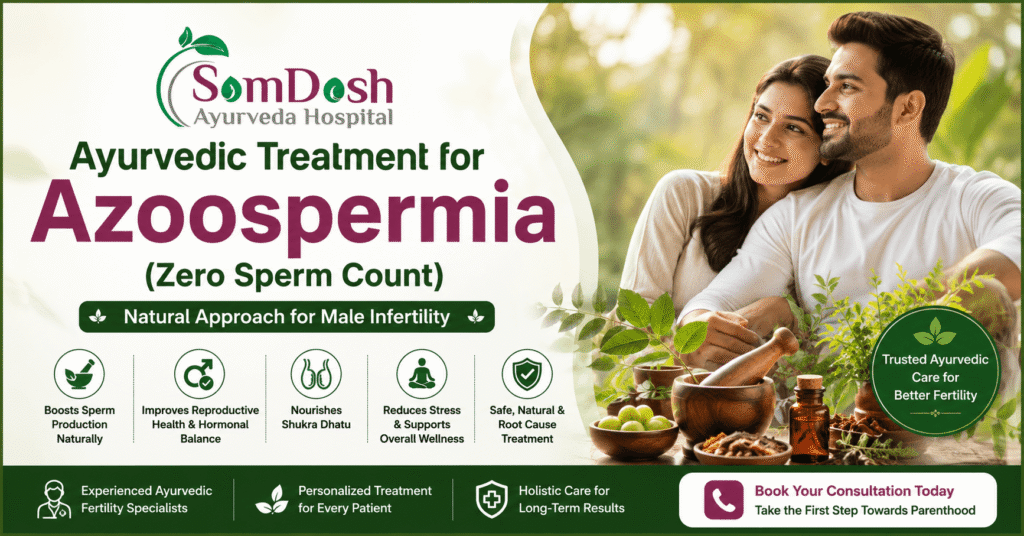
Ayurvedic Treatment for Azoospermia (Zero Sperm Count)
- 15,000+ Patients Treated
- Experienced Ayurvedic Doctors
- Customized Treatment Plans
Regain Hope with Natural Ayurvedic Treatment for Azoospermia
Azoospermia is one of the most challenging causes of male infertility, but it does not always mean that fatherhood is impossible. If your semen analysis shows zero sperm count (azoospermia), identifying the underlying cause is the first and most important step toward treatment.
At Samdosh Ayurveda, we believe in treating the root cause rather than simply managing reports. Our personalized Ayurvedic treatment combines classical herbal medicines, Panchakarma therapies, dietary guidance, and lifestyle modifications to naturally support male reproductive health.
Whether your condition is caused by hormonal imbalance, reproductive tract blockage, chronic inflammation, poor testicular function, varicocele, stress, or unhealthy lifestyle habits, our experienced Ayurvedic doctors create an individualized treatment plan based on your body’s constitution (Prakriti), Dosha imbalance, and medical history.
Our objective is to:
- Improve reproductive health naturally
- Support healthy sperm production
- Enhance hormonal balance
- Improve testicular nourishment
- Promote better semen quality
- Increase the chances of natural conception whenever medically appropriate
Unlike generic treatment approaches, Ayurveda focuses on improving overall health, metabolism, circulation, and reproductive tissue nourishment, helping many patients move toward better fertility outcomes. Treatment suitability depends on the individual’s diagnosis and cause of azoospermia.
What is Azoospermia?
Azoospermia is a medical condition in which no sperm are found in the semen after laboratory examination. It affects approximately 1% of all men and around 10–15% of infertile men, making it a significant cause of male infertility.
Many men experience no physical symptoms and only discover the condition while undergoing fertility evaluation.
Azoospermia is broadly classified into two categories:
Obstructive Azoospermia
In this condition, sperm are produced normally inside the testicles but cannot reach the semen due to a blockage in the reproductive tract.
Possible causes include:
- Vas deferens blockage
- Previous surgeries
- Infection
- Injury
- Congenital abnormalities
Non-Obstructive Azoospermia
This occurs when the testes produce very little or no sperm because of impaired sperm production.
Common causes include:
- Hormonal imbalance
- Genetic conditions
- Varicocele
- Testicular damage
- Chemotherapy or radiation
- Chronic illness
- Lifestyle factors
Proper diagnosis is essential because treatment depends entirely on identifying the underlying cause.
Common Symptoms of Azoospermia
Many men with azoospermia have no obvious symptoms besides infertility. However, depending on the cause, they may experience:
- Inability to conceive after one year of regular unprotected intercourse
- Low semen volume
- Erectile dysfunction
- Reduced sexual desire
- Testicular pain or swelling
- Small testes
- Hormonal imbalance
- Decreased facial or body hair
- Previous history of mumps orchitis
- History of reproductive tract surgery
If you notice any of these symptoms, early evaluation by an experienced fertility specialist can help determine the best course of treatment.
Causes of Azoospermia
Several medical and lifestyle factors may contribute to azoospermia.
Medical Causes
- Hormonal disorders
- Varicocele
- Undescended testes
- Testicular injury
- Genetic abnormalities
- Previous infections
- Congenital absence of vas deferens
- Tumors
- Radiation therapy
- Chemotherapy
Lifestyle Factors
- Smoking
- Alcohol consumption
- Drug abuse
- Chronic stress
- Obesity
- Poor nutrition
- Lack of exercise
- Exposure to industrial chemicals
- Excessive heat exposure
Our Ayurvedic Treatment for Azoospermia
At Samdosh Ayurveda, we believe that effective Ayurvedic treatment for azoospermia (zero sperm count) begins with identifying and addressing the underlying cause rather than focusing only on the diagnosis. Since azoospermia can result from hormonal imbalances, poor testicular function, varicocele, infections, reproductive tract obstruction, or lifestyle-related factors, every patient receives a personalized treatment plan based on a detailed Ayurvedic assessment.
Our treatment approach aims to restore the balance of the body’s Doshas (Vata, Pitta, and Kapha), improve the quality of Shukra Dhatu (reproductive tissue), support healthy sperm production where appropriate, and enhance overall reproductive wellness. The treatment plan may include a combination of classical Ayurvedic medicines, Panchakarma therapies, dietary modifications, and lifestyle guidance tailored to the individual’s condition.
1. Comprehensive Ayurvedic Consultation & Diagnosis
Every treatment begins with a thorough evaluation by our experienced Ayurvedic doctors. Along with reviewing your medical history and semen analysis reports, we assess your body constitution (Prakriti), Dosha imbalance, digestive health (Agni), and lifestyle factors to understand the root cause of azoospermia. If required, additional investigations may be recommended for a more accurate diagnosis.
2. Personalized Ayurvedic Medicines
Based on your diagnosis, customized Ayurvedic formulations are prescribed to support male reproductive health. These medicines are selected according to your individual condition and may help:
- Support healthy sperm production
- Nourish Shukra Dhatu
- Improve hormonal balance
- Promote testicular health
- Enhance overall vitality and reproductive wellness
- Reduce oxidative stress and inflammation
Our prescriptions are individualized, and self-medication is not recommended.
3. Panchakarma Therapy (When Recommended)
For suitable patients, Panchakarma therapies may be advised to support detoxification and improve overall health. Depending on the individual’s condition, therapies such as Basti, Abhyanga, Swedana, or other classical Ayurvedic procedures may be included as part of the treatment plan.
These therapies aim to:
- Balance aggravated Doshas
- Improve circulation
- Support tissue nourishment
- Promote better metabolic function
- Enhance overall reproductive health
4. Diet & Lifestyle Management
Diet and daily habits play an important role in male fertility. Our experts provide personalized recommendations that may include:
- A fertility-supportive Ayurvedic diet
- Foods rich in essential nutrients
- Regular physical activity
- Stress management techniques
- Adequate sleep and recovery
- Avoidance of smoking, alcohol, and excessive heat exposure
- Maintaining a healthy body weight
These changes help create a healthier environment for reproductive function.
5. Ongoing Monitoring & Treatment Adjustments
Male fertility treatment requires regular follow-up. Throughout your treatment journey, our doctors monitor your progress, review laboratory reports when needed, and adjust the treatment plan based on your response. This individualized approach helps ensure that the treatment remains aligned with your health goals.
How Long Does Ayurvedic Treatment for Azoospermia Take?
The duration of Ayurvedic treatment for azoospermia varies from person to person because it depends on the underlying cause, overall health, age, severity of the condition, and the body’s response to treatment. Since sperm production is a gradual biological process, improving reproductive health naturally requires consistency and regular follow-up.
Many patients begin to notice improvements in their overall health and well-being during the course of treatment. However, changes in semen parameters, where improvement is possible, typically require several months because a complete sperm production cycle takes approximately 70–90 days.
Treatment duration may also differ depending on whether the condition is:
- Obstructive Azoospermia – where sperm production is normal but blocked from reaching the semen.
- Non-Obstructive Azoospermia – where sperm production is reduced or absent due to impaired testicular function or other medical factors.
At Samdosh Ayurveda, every treatment plan is personalized based on your diagnosis, laboratory reports, and overall health. During the treatment journey, our doctors regularly monitor your progress and make adjustments to the treatment plan whenever required.
Factors That Influence Treatment Duration
- Root cause of azoospermia
- Type of azoospermia (Obstructive or Non-Obstructive)
- Age and general health
- Hormonal balance
- Presence of conditions such as varicocele or infections
- Consistency in taking prescribed Ayurvedic medicines
- Following the recommended diet and lifestyle changes
- Individual response to treatment
What Our Patients Are Saying

Why Choose Samdosh Ayurveda for Azoospermia Treatment?
- Experienced Ayurvedic doctors specializing in male infertility
- Personalized treatment plans based on the root cause
- Holistic approach combining Ayurvedic medicines, Panchakarma, diet, and lifestyle guidance
- Focus on improving overall reproductive health and wellness
- Individualized follow-up and continuous care throughout your treatment journey
Book your consultation today to discuss your condition with our experienced Ayurvedic doctors and receive a personalized treatment plan for azoospermia based on your unique health needs.
Doctor For Azoospermia
Our highly qualified practitioners will treat Azoospermia at Samdosh Ayurveda by applying the traditional Ayurvedic concepts with the knowledge of the modern era.
They are not general solutions but seek to establish the specific cause of the condition. Each patient is given a personalized care whereby the treatment plan is based on the type of body, lifestyle and health history of the patient.
Our physicians provide patients with confidence, enhanced performance and overall wellness through a caring attitude and proven treatment, making them feel confident again naturally.
Frequently Asked Questions
1. What is azoospermia?
Azoospermia is a condition in which no sperm are present in the semen during semen analysis. It is one of the common causes of male infertility and may occur due to blocked sperm ducts (obstructive azoospermia) or reduced sperm production (non-obstructive azoospermia).
2. Can Ayurveda treat azoospermia naturally?
Ayurveda focuses on identifying and managing the underlying factors that may contribute to azoospermia, such as Dosha imbalance, hormonal disturbances, poor reproductive tissue nourishment, lifestyle factors, and overall health. The treatment plan is personalized and may include Ayurvedic medicines, Panchakarma, diet, and lifestyle modifications. The suitability and outcome of treatment depend on the individual’s diagnosis and medical condition.
3. What are the common causes of azoospermia?
Azoospermia can occur due to several reasons, including:
- Hormonal imbalances
- Varicocele
- Genetic conditions
- Reproductive tract blockage
- Testicular injury
- Previous infections
- Undescended testicles
- Chemotherapy or radiation therapy
- Lifestyle factors such as smoking, obesity, alcohol consumption, and chronic stress
4. What is the difference between obstructive and non-obstructive azoospermia?
Obstructive Azoospermia:
Sperm are produced normally but cannot reach the semen because of a blockage in the reproductive tract.
Non-Obstructive Azoospermia:
The testes produce very few or no sperm due to impaired sperm production or hormonal issues.
A proper diagnosis is essential because the treatment approach differs for each type.
5. How is azoospermia diagnosed?
Diagnosis typically involves:
- Semen analysis (usually repeated for confirmation)
- Medical history evaluation
- Physical examination
- Hormone profile tests
- Scrotal ultrasound (if required)
- Genetic testing in selected cases
- Additional fertility investigations when recommended by the doctor
6. How long does Ayurvedic treatment for azoospermia take?
The treatment duration varies depending on the underlying cause, type of azoospermia, age, overall health, and response to treatment. Since sperm production naturally takes around 70–90 days, treatment often requires patience, regular follow-ups, and adherence to the prescribed plan.
7. Is Panchakarma recommended for azoospermia?
Panchakarma therapies may be recommended for selected patients after a detailed consultation. Depending on the individual’s condition, therapies such as Basti, Abhyanga, and Swedana may be included to support overall health and Dosha balance as part of a personalized treatment plan.
8. Can azoospermia be cured permanently?
The possibility of improvement depends on the underlying cause. Some cases may respond well to treatment, while others may require additional medical or assisted reproductive interventions. An accurate diagnosis by an experienced fertility specialist is essential before determining the most appropriate treatment plan.
9. When should I consult a doctor for azoospermia?
You should consult a fertility specialist if:
- You have been trying to conceive for 12 months or more without success.
- Your semen analysis shows zero sperm count.
- You have a history of varicocele, testicular injury, hormonal disorders, or reproductive surgery.
- You experience symptoms such as reduced libido, testicular pain, or hormonal imbalance.
Early evaluation can help identify the underlying cause and guide the most appropriate treatment options.